



TRPV1
TRPV1 (transient receptor potential vanilloid 1) is a non-selective cation channel predominantly expressed in peripheral nociceptors, where it functions as a molecular sensor for noxious heat, capsaicin, protons, and other harmful stimuli, thereby contributing to pain detection and thermosensation[1][2]. TRPV1 activation permits cation influx, particularly Ca2+, and integrates multiple nociceptive signals that drive neuronal excitation and inflammatory pain responses[2][3]. Mechanistically, TRPV1 undergoes sensitization in response to inflammatory mediators and chronic pain states, enhancing the transduction of nociceptive signaling and promoting hyperalgesia through inflammatory signaling pathways[3][4][5]. In disease models, altered TRPV1 activity has been implicated in inflammatory pain, neuropathic pain, diabetic peripheral neuropathy, cancer-associated pain, and other disorders characterized by persistent nociceptive sensitization[3][4][6]. Compared with related transient receptor potential channels, TRPV1 is distinguished by its robust activation by capsaicin and noxious heat, whereas TRPA1 primarily functions as a chemical irritant sensor despite frequent co-expression in nociceptive afferents[7][8]. This functional specialization makes TRPV1 a central experimental model for investigating pain transduction, neuro-immune communication, and inflammatory signaling[3][6]. For experimental applications, capsaicin is widely used as a selective TRPV1 agonist to activate or desensitize TRPV1-positive neurons, whereas antagonists such as capsazepine serve as pharmacological tools for dissecting TRPV1-dependent mechanisms and evaluating analgesic strategies[6][9].
References:
- [1]. Caterina MJ, et al. The capsaicin receptor: a heat-activated ion channel in the pain pathway. Nature. 1997 Oct 23;389(6653):816-24. [Content Brief]
- [2]. Sujan MA, et al. Managing competing organizational priorities in clinical handover across organizational boundaries. J Health Serv Res Policy. 2015 Jan;20(1 Suppl):17-25. [Content Brief]
- [3]. Immke DC, et al. The TRPV1 receptor and nociception. Semin Cell Dev Biol. 2006 Oct;17(5):582-91. [Content Brief]
- [4]. Wang Y, et al. TRPV1 SUMOylation regulates nociceptive signaling in models of inflammatory pain. Nat Commun. 2018 Apr 18;9(1):1529. [Content Brief]
- [5]. Li T, et al. TRPV1 feed-forward sensitisation depends on COX2 upregulation in primary sensory neurons. Sci Rep. 2021 Feb 10;11(1):3514. [Content Brief]
- [6]. Gao N, et al. The dual role of TRPV1 in peripheral neuropathic pain: pain switches caused by its sensitization or desensitization. Front Mol Neurosci. 2024 Sep 9;17:1400118. [Content Brief]
- [7]. Gouin O, et al. TRPV1 and TRPA1 in cutaneous neurogenic and chronic inflammation: pro-inflammatory response induced by their activation and their sensitization. Protein Cell. 2017 Sep;8(9):644-661. [Content Brief]
- [8]. Raftery J. Mental health services in transition: the United States and the United Kingdom. Br J Psychiatry. 1992 Nov;161:589-93. doi: 10.1192/bjp.161.5.589. PMID: 1422604. et al. Mental health services in transition: the United States and the United Kingdom. Br J Psychiatry. 1992 Nov;161:589-93. [Content Brief]
-
TRPV1 Related Products (60)
Related Products (60)

-
6-Iodonordihydrocapsaicin
 0 ImagesCat. No.: HY-108459CAS No.: 859171-97-46-Iodonordihydrocapsaicin is a TRPV1 antagonist. 6-Iodonordihydrocapsaicin functionally blocks TRPV1-mediated responses, including capsaicin-induced ion currents in dorsal root ganglion neurons and distension-induced firing of jejunal spinal afferent fibers in mice. 6-Iodonordihydrocapsaicin can be used in the research of visceral pain and anxiety disorders.
-
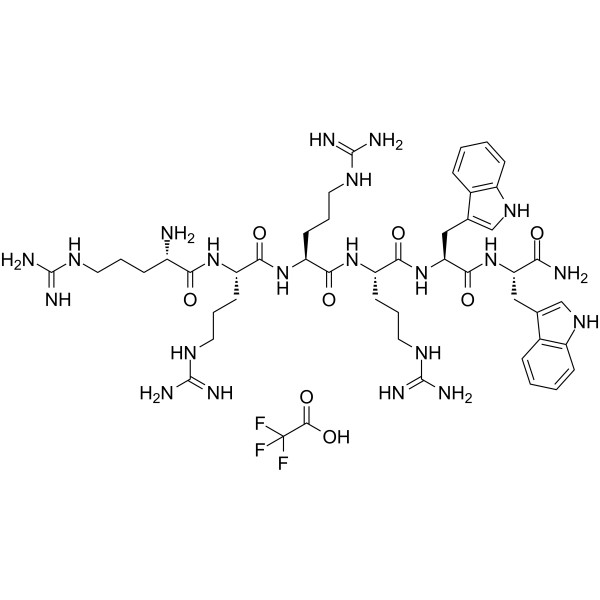
TL-119
 0 ImagesCat. No.: HY-P11022CAS No.: 55599-68-3Synonyms: A-3302-BTL-119 (A-3302-B) is a polypeptide. TL-119 can be isolated from the bacteria Micromonospora sp. MAG 9-7 and Saccharomonospora sp. CNQ-490. TL-119 inhibits TRPV-1. TL-119 exhibits antiviral activity against HSV-2. TL-119 possesses anticancer activity against gastric cancer and colorectal cancer.
-
Ovalicin
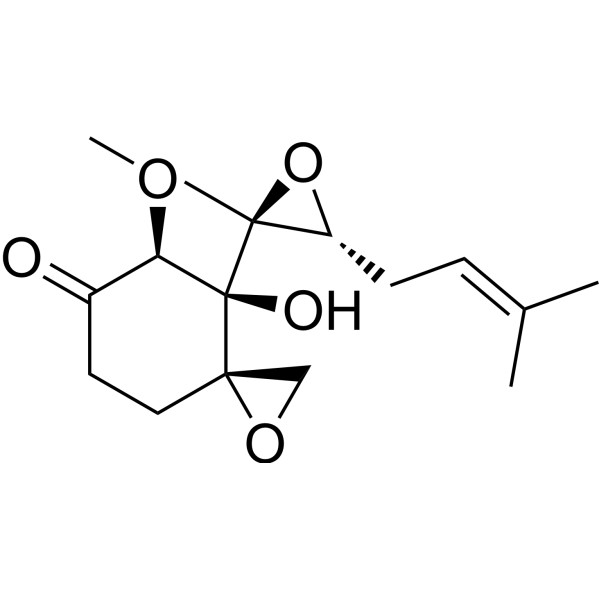 0 ImagesCat. No.: HY-156959CAS No.: 19683-98-8Ovalicin is a multi-target inhibitor that targets MetAP2, HRH2, JAK2 and TRPV1, with anti-inflammatory and anti-atopic dermatitis activities. Ovalicin covalently binds to MetAP2 to inhibit its function, thereby blocking the replication of Enterocytozoon bieneusi and Vittaforma corneae. Ovalicin alleviates intestinal injury and prolongs survival in infected mouse models, without showing obvious hepatorenal toxicity. Ovalicin attenuates LPS-induced calcium influx, reduces the infiltration of macrophages and mast cells in the skin, and regulates the expression of inflammation-related genes such as IL-31, effectively relieving allergic symptoms in mouse models. Ovalicin can be used for the research of microsporidiosis and atopic dermatitis.
-
KJM429
 0 ImagesCat. No.: HY-165459CAS No.: 401907-57-1Synonyms: MK-056KJM429 (MK-056) is a high-affinity ligand for the rat vanilloid receptor rTRPV1 (Ki=30-63 nM) with a unique dual regulatory function. KJM429 acts as a competitive antagonist to inhibit TRPV1 receptor activation induced by Capsaicin (HY-10448), resiniferatoxin, thermal stimulation and weak acid (pH 6.0), and switches to a TRPV1 agonist under strong acid conditions (pH<5.5). KJM429 effectively blocks calcium influx induced by Capsaicin and partial thermal stimulation, and triggers calcium uptake under low pH conditions, with minimal effects on non-TRPV1-mediated calcium signaling. KJM429 can be used for research on the mechanisms of pain-related diseases such as postherpetic neuralgia, diabetic neuropathy, cluster headache, osteoarthritis and pruritus.
-
MK-2295
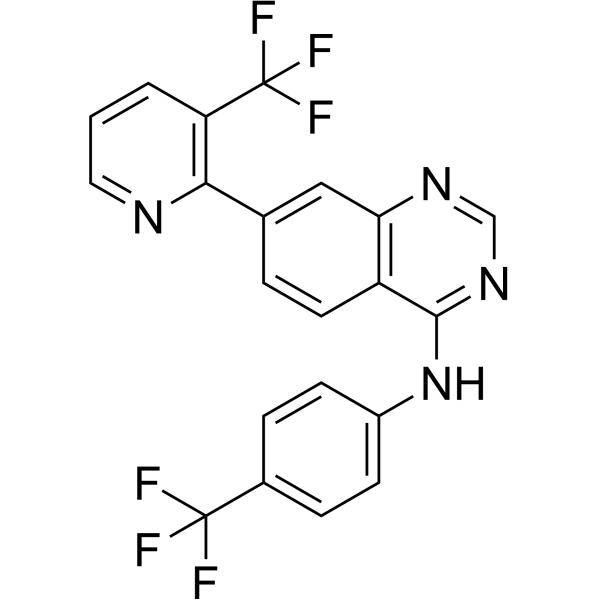 0 ImagesCat. No.: HY-W517163CAS No.: 573678-04-3Synonyms: NGD-8243
-
ABT-116
 0 ImagesCat. No.: HY-115133CAS No.: 1008529-42-7ABT-116 is an orally active antagonist of transient receptor potential vanilloid type 1 (TRPV1). ABT-116 has analgesic efficacy. ABT-116 can be used for the research of neurological disease.
-
SA-13353
 0 ImagesCat. No.: HY-106427CAS No.: 379262-36-9SA-13353 is a TRPV1 agonist with cardioprotective effect. SA-13353 can be used for the research of cardiovascular disease .

-
TRPV1 antagonist 5
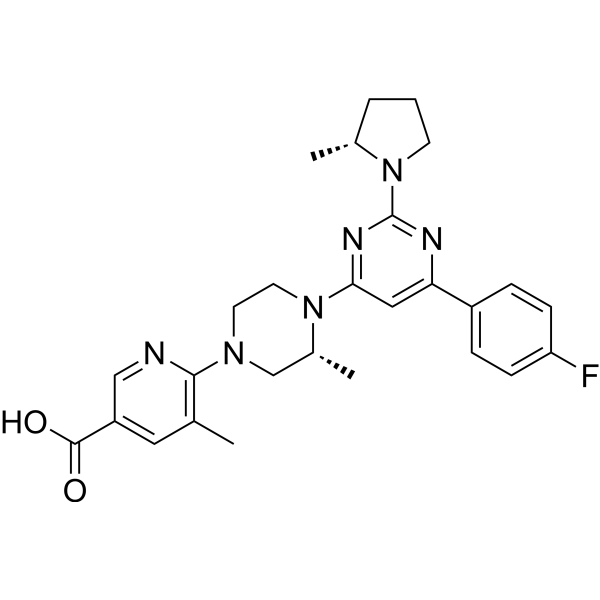 0 ImagesTRPV1 antagonist 5 (compound 1) is a potent TRPV1 antagonist.
-
FAAH-IN-10
 0 ImagesCat. No.: HY-184331FAAH-IN-10 is a FAAH inhibitor and TRPV1 antagonist, with an IC50 of 0.57 μM against human FAAH. FAAH-IN-10 regulates FAAH activity, antagonizes TRPV1 activity, and exhibits analgesic and anti-inflammatory activities. FAAH-IN-10 does not induce TRPV1-mediated hyperthermia. FAAH-IN-10 can be used for pain-related research.
-
TRPV1 antagonist 11
 0 ImagesCat. No.: HY-176063CAS No.: 3084843-71-7TRPV1 antagonist 11 (compound 2ac) is a potent TRPV1 antagonist with an IC50 of 29.3 nM. TRPV1 antagonist 11 is a potent μ-opioid receptor (MOR) agonist with a Ki of 60.3 nM. TRPV1 antagonist 11, a pyrimidine piperazine, exhibits pain relieving effects by antagonizing TRPV1 and stimulating MOR. TRPV1 antagonist 11 shows a potent, dose-dependent anti-nociceptive effect in a Formalin-induced pain model in mice.
-
A 80426
 0 ImagesCat. No.: HY-120037CAS No.: 152148-63-5A 80426 is an orally active serotonin (5-HT uptake) inhibitor (IC50 = 13 nM; Ki = 3.8 nM) and α2-Adrenoceptor receptor antagonist (Ki = 2 nM). A 80426 shows weak antagonistic effect to dopamine D1 receptor (Ki = 744 nM) and D2 receptor (Ki = 52 nM). A 80426 upregulates the expression and activity of TRPV1, activates the NF-κB and PI3K pathways, and reduces the levels of pro-inflammatory cytokines IL-1β, IL-6, and TNF-α. A 80426 can be used in research related to inflammatory pain and depression.
-
Phanginin J
 0 ImagesCat. No.: HY-N21629CAS No.: 1011528-67-8Phanginin J is a Cassane-type furanoditerpene found in the seeds of Caesalpinia sappan L. Phanginin J docks with the TRPV1 molecule and may inhibit nociceptive sensory signal transduction by antagonizing TRPV1. Phanginin J can be used in research related to chemotherapy-induced peripheral neuropathy (CIPN).
-
GRC-6211
 0 ImagesCat. No.: HY-105324CAS No.: 1166398-35-1GRC-6211 is an orally active and selective TRPV1 antagonist. GRC-6211 exhibits anti-inflammation effect.

-
DD-161515
 0 ImagesCat. No.: HY-183857CAS No.: 410080-55-6DD-161515 is a TRPV1/VR1 inhibitor with an IC50 of 0.7 μM in rats. DD-161515 binds to an allosteric site of TRPV1 distinct from that of capsaicin, blocks channel opening, inhibits receptor-mediated calcium ion influx, reduces the excitability of peripheral sensory nerve fibers, and thereby inhibits nociception induced by heat and transmission of chemically induced pain signals. DD-161515 can be used in studies related to inflammatory pain.
-
2,2-Diphenyltetrahydrofuran
 0 Images2,2-Diphenyltetrahydrofuran (DPTHF) acts as a TRPV3 channel antagonist and is a structural analog of 2-Aminoethyl diphenylborinate (HY-W009724). 2,2-Diphenyltetrahydrofuran shows weak inhibitory activity against TRPV1 and TRPV2. It reduces hedonic feeding in mice exposed to Olanzapine (HY-14541). 2,2-Diphenyltetrahydrofuran can be used in the research of nervous system-related diseases.

-
4,5-Di-O-caffeoylquinic acid
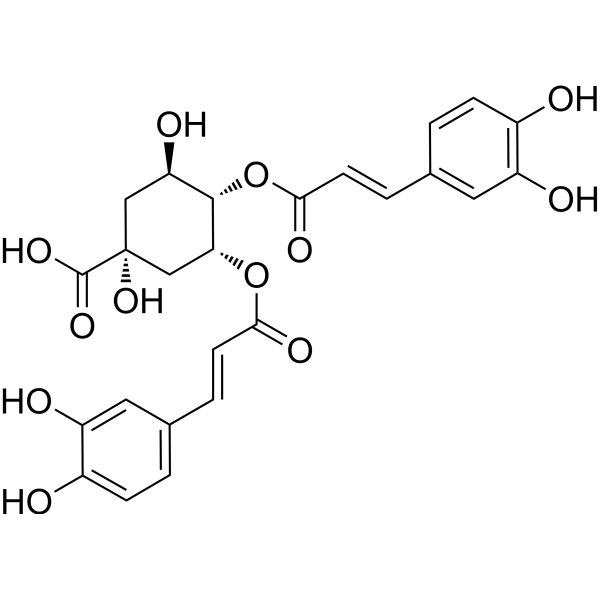 0 ImagesSynonyms: 4,5-di-O-CQA4,5-Di-O-caffeoylquinic acid (4,5-di-O-CQA) is a natural product with multiple activities including anti-inflammatory, antioxidant, and antibacterial properties. 4,5-Di-O-caffeoylquinic acid induces intracellular Ca2+ influx, and inhibits hypoxia-induced COX-2 expression and cell migration via the TRPV1-mediated pathway. 4,5-Di-O-caffeoylquinic acid scavenges DPPH free radicals, inhibits Cu2+-mediated LDL oxidation, and reduces the production of TBARS. 4,5-Di-O-caffeoylquinic acid promotes intracellular ATP production, inhibits Aβ42 aggregation and β-sheet conversion, and protects neuroblastoma cells. 4,5-Di-O-caffeoylquinic acid inhibits the growth of Bacillus shigae. 4,5-Di-O-caffeoylquinic acid can be used in studies related to atherosclerosis, Alzheimer's disease, and bacterial infections.



